What's New in Embedded Systems and IoT that Matters for Indian Business Automation?
Published 2026-10-19 · RS-Techie
The Rise of Edge AI and Smart Automation at the Source
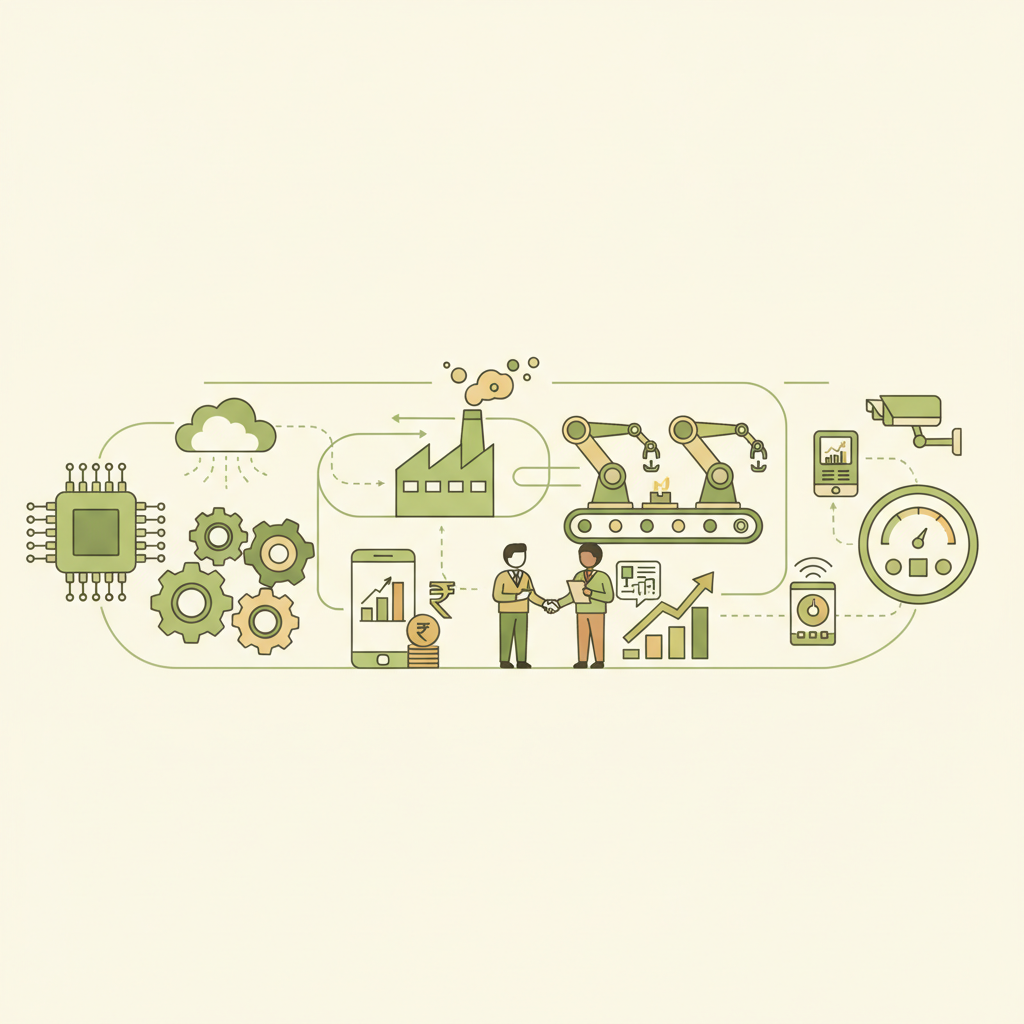
Edge AI, which involves deploying artificial intelligence algorithms directly on devices or local infrastructure where data is generated, is a significant development for business automation in India. This technology is crucial for Indian factories, particularly those in remote or semi-urban areas, as it allows data processing locally without constant internet access, leading to faster decisions, better operational control, and improved productivity. By bringing intelligence closer to the action, Edge AI reduces network latency, enhances data security by minimizing sensitive data transfer to external servers, and lowers bandwidth and infrastructure costs. This shift is redefining industrial automation, enabling real-time decision-making for critical applications like quality inspection, predictive maintenance, worker safety, and production optimization across sectors such as automotive, textiles, pharmaceuticals, and food processing.
Digital Twins and Predictive Maintenance: Revolutionizing Operations
Digital Twin technology, which creates virtual replicas of physical assets, processes, or entire factories, is increasingly vital for Indian manufacturing to enhance operational efficiency, cut costs, and drive innovation. These virtual models integrate real-time sensor data, simulation, and analytics, allowing businesses to monitor performance, identify issues, and optimize operations before implementing changes in the physical world. A key application of digital twins is in Predictive Maintenance, where IoT sensors and AI are used to monitor equipment health and forecast failures proactively. This data-driven approach moves away from reactive or time-based maintenance, significantly reducing unplanned downtime and emergency repair costs. For a small Indian factory with 10-30 machines, a predictive maintenance system as part of a unified platform can cost ₹2–5 lakh as a one-time investment, with factories typically seeing an ROI within 6–12 months.
Cost-Effectiveness and ROI for Indian SMBs
The cost of implementing IoT solutions in India has become more accessible, ranging from approximately ₹50,000 for basic single-machine monitoring to ₹25+ lakh for comprehensive smart factory setups with ERP integration. For a typical 10-machine deployment, the initial investment for the first year might be between ₹1.5–3 lakh, including sensors, edge gateway, network setup, platform subscription, installation, and training. After the first year, monthly recurring costs for a 10-machine setup can be around ₹5,000–₹20,000, covering cloud hosting, cellular data, and optional annual maintenance contracts. The return on investment for industrial IoT in India is compelling, with factories reporting 30–50% reductions in unplanned downtime and 20–30% lower maintenance costs. Businesses integrating AI into their marketing strategies have also reported cost efficiencies of 20-30% and improved ROI by over 40%. While IoT app development costs can range from $15,000 to over $100,000 depending on complexity, starting with a Minimum Viable Product (MVP) can help validate ideas with a lower initial investment.
Navigating Challenges and Harnessing New Opportunities
Despite the significant benefits, Indian small and medium businesses face challenges in IoT adoption, including high deployment and maintenance costs, cybersecurity risks, data privacy concerns, and issues with interoperability. Gaps in connectivity infrastructure in rural areas and a shortage of skilled workforce also pose hurdles. However, the Indian government is actively addressing these by considering extending cybersecurity certification for IoT devices and implementing regulations like the Digital Personal Data Protection Act, 2023 (DPDP Act), which mandates data localization and strict reporting for breaches. Opportunities are vast, with the Indian IoT market projected to reach $15 billion by 2025. One rapidly growing area is WhatsApp automation, with platforms like Chat ON Desk, WATI, Zoko, Gupshup, and Interakt offering solutions for bulk messaging, chatbot automation, and CRM integration. RS-Techie's Leporis platform, for example, provides AI-powered WhatsApp automation designed to simplify customer engagement and streamline operations for Indian businesses, leveraging these trends for practical application.
Frequently Asked Questions
What is Edge AI and why is it important for Indian businesses?
Edge AI refers to processing artificial intelligence algorithms directly on local devices or infrastructure where data is generated, rather than sending it all to the cloud. This is particularly important for Indian businesses, especially those in remote areas, because it enables faster decision-making, reduces reliance on constant internet connectivity, enhances data security by processing data locally, and lowers bandwidth costs.
How does Predictive Maintenance using IoT benefit small factories in India?
Predictive Maintenance uses IoT sensors and AI to continuously monitor the health of machines and predict potential failures before they occur. For small Indian factories, this means significantly reduced unplanned downtime, lower emergency repair costs, and an extended lifespan for expensive machinery. This approach can lead to a return on investment within 6–12 months.
What are the typical costs and ROI for implementing IoT automation in India?
The cost of IoT implementation in India can range from approximately ₹50,000 for basic monitoring of a few machines to ₹25+ lakh for comprehensive smart factory solutions. For a small factory with around 10 machines, the initial investment might be ₹1.5–3 lakh for the first year, with recurring monthly costs of ₹5,000–₹20,000 afterwards. Businesses often see a compelling return on investment, with efficiency gains and cost reductions typically realized within 6–12 months.