What's New in Embedded Systems and IoT That Matters for Business Automation in India?
Published 2026-09-01 · RS-Techie
The Growing Landscape of IoT and Embedded Systems in Indian Business Automation
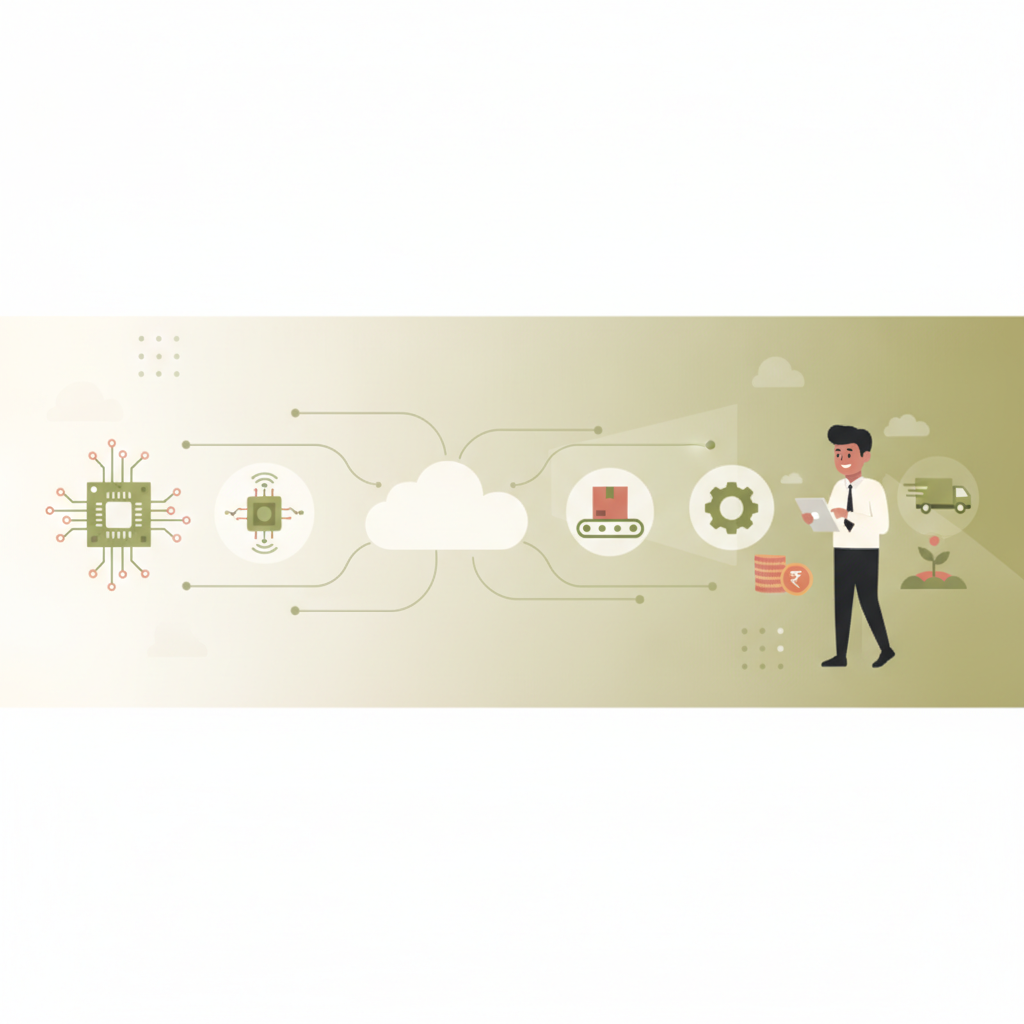
The landscape of business automation in India is rapidly being reshaped by advancements in embedded systems and the Internet of Things (IoT), presenting significant opportunities for small and medium businesses (SMBs). The Indian IoT market, valued at USD 50 billion in 2025, is projected to reach USD 109 billion by 2031, growing at a Compound Annual Growth Rate (CAGR) of 13.80%. Similarly, the Indian embedded systems market, valued at USD 4.9 billion in 2025, is expected to grow at a CAGR of 10.3% to reach USD 9.6 billion by 2032. This growth is driven by factors such as rapid digital transformation, increasing adoption of connected devices, and government initiatives like Digital India and Make in India. These technologies are moving beyond simple connectivity to offer sophisticated, intelligent solutions that can significantly enhance operational efficiency, reduce costs, and provide real-time insights for businesses across various sectors, including manufacturing, healthcare, and smart cities.
Edge AI: Bringing Intelligence Closer to Operations
Edge AI is a pivotal development in embedded systems, enabling artificial intelligence algorithms to be processed directly on local devices or infrastructure near where data is generated, rather than relying solely on cloud computing. This approach is particularly viable for real-time, shop-floor transformation for India's Micro, Small, and Medium Enterprises (MSMEs). By processing data at the 'edge,' businesses can achieve faster decision-making, significantly reduce network latency, and enhance data privacy by keeping sensitive information localized. For Indian manufacturers, Edge AI allows factories, especially those in remote or semi-urban areas, to operate efficiently even with limited or inconsistent internet connectivity. This technology unlocks improvements in quality inspection, machine maintenance, compliance management, and energy efficiency, contributing to higher productivity and competitiveness. The global embedded AI market is projected to reach USD 30.60 billion by 2030, underscoring its growing importance.
Predictive Maintenance: Minimizing Downtime and Maximizing Efficiency
Predictive maintenance, powered by IoT sensors and AI algorithms, is a transformative strategy that uses real-time equipment data to detect issues before failures occur, thereby avoiding unplanned stoppages and reducing emergency maintenance costs. For Indian manufacturing companies, where unplanned downtime can cost anywhere between ₹2–5 lakhs per hour in a medium-sized plant, this approach is crucial for profitability. IoT sensors monitor parameters like temperature, pressure, and vibration, feeding data into AI models that predict potential equipment malfunctions. This allows businesses to schedule maintenance proactively, extending asset lifespan and improving workforce productivity. The cost for an IoT sensor setup for predictive maintenance can start from ₹50,000 per machine, with most companies recovering their investment within 6–12 months due to reduced downtime. However, the effectiveness of predictive maintenance depends on factors like the cost of downtime, the nature of equipment failure, and a responsive maintenance team.
Simplified Automation through Low-Code/No-Code Platforms and Messaging Integration
The adoption of low-code and no-code IoT platforms is simplifying the development and deployment of business automation solutions, making them more accessible for Indian SMBs without requiring extensive coding expertise. These platforms allow businesses to build IoT applications faster, manage devices at scale, and visualize real-time data with customizable dashboards. Furthermore, integrating IoT devices with popular messaging platforms like WhatsApp is emerging as a cost-effective and user-friendly way to manage smart systems and automate tasks. By leveraging the WhatsApp Business API, businesses can send commands to IoT devices, receive real-time alerts, and track status updates through a familiar interface that bypasses the need for custom apps. For example, a logistics company could track IoT-enabled delivery trucks via a WhatsApp bot, or a smart irrigation system could send alerts to farmers about soil moisture levels. RS-Techie, an AI-powered digital marketing & automation agency, leverages platforms like Leporis to help Indian businesses implement such seamless WhatsApp automation, enabling real-time communication and control with integrated systems.
Navigating Challenges and the Future Outlook for Indian Businesses
While the opportunities are vast, Indian businesses adopting embedded systems and IoT face several challenges, including a fragmented regulatory environment, data security concerns, integration complexities, and a shortage of skilled cybersecurity professionals. Lack of reliable internet connectivity, especially in remote areas, also poses a significant hurdle for real-time data access and video capture from IoT devices. To overcome these, SMBs are advised to start with pilot projects to prove value quickly, prioritize managed security services, and partner with vendor-neutral system integrators to bridge skill and integration gaps. The future outlook is promising, with the Indian government actively promoting smart city initiatives and investing in digital infrastructure upgrades, and a comprehensive data protection regulation planned for introduction by 2026. The convergence of 5G networks, AI, and edge computing is expected to further boost IoT adoption, enabling more efficient and reliable industrial connectivity with low-latency communication capabilities, transforming India into a global industrial hub.
Frequently Asked Questions
What are the primary benefits of adopting IoT and embedded systems for Indian SMBs?
Adopting IoT and embedded systems offers Indian SMBs significant benefits, including enhanced operational efficiency through real-time monitoring, reduced unplanned downtime with predictive maintenance, and cost savings from optimized energy consumption and asset management. These technologies also enable faster, data-driven decision-making and improved data privacy by processing information closer to the source through Edge AI.
What is Edge AI and why is it important for business automation in India?
Edge AI involves processing artificial intelligence algorithms directly on local devices or infrastructure where data is generated, rather than sending it to the cloud. For business automation in India, especially for MSMEs, Edge AI is crucial because it enables real-time decision-making, reduces network latency, improves data privacy, and allows systems to function effectively even in areas with limited or inconsistent internet connectivity. This leads to better quality control, predictive maintenance, and energy efficiency directly on the shop floor.
How can WhatsApp be used to automate business processes with IoT devices in India?
WhatsApp can be used to automate business processes with IoT devices in India by leveraging the WhatsApp Business API to send commands, receive real-time alerts, and monitor device status through a familiar messaging interface. This integration eliminates the need for specialized control dashboards, reduces costs, and allows for remote management of smart systems, such as adjusting smart lighting in a retail store or tracking IoT-enabled delivery vehicles. Companies like RS-Techie offer platforms that facilitate this seamless integration for Indian businesses.