What AI Automation Trends Should Indian Small Businesses Focus On Right Now?
Published 2026-11-06 · RS-Techie
AI-Powered Customer Engagement, Especially on WhatsApp
Indian small businesses should prioritize AI-powered customer engagement, particularly through WhatsApp, as it is the most effective communication channel for most Indian customers. AI chatbots and voice bots are transforming customer service by providing 24/7 automated assistance, handling queries, appointment bookings, order tracking, and even complex actions like cancellations and invoice generation. This approach significantly reduces operational costs by automating common queries and scales effortlessly to manage high volumes of customer interactions. WhatsApp messages boast exceptionally high engagement, with approximately 98% open rates and 45% reply rates on opted-in lists, far surpassing traditional channels like email. Furthermore, these AI tools often support Hindi and other regional Indian languages, making them highly accessible and effective across diverse customer bases. Integrating AI with WhatsApp Business Platform allows for structured, compliant communication, ensuring customer consent and adherence to messaging rules.
Automated Lead Generation and Sales Follow-up
Small businesses can significantly enhance their sales processes by adopting AI for automated lead generation and rapid follow-up. AI can instantly respond to new leads, often within seconds, preventing potential sales from being lost due to delayed human responses. This includes sending immediate WhatsApp messages, asking qualification questions, collecting key information, and routing qualified leads to sales personnel in real-time. Some advanced AI solutions even offer AI voice calling for the first contact, ensuring leads are engaged promptly, even outside typical business hours. This automation allows small teams to handle more inquiries and focus human effort on closing deals rather than repetitive initial interactions. For example, brands using WhatsApp automation have reported that about 57% of new leads arrive through these automated flows. RS-Techie, an AI-powered digital marketing & automation agency, helps Indian businesses implement such WhatsApp automation and other AI solutions to streamline lead management and customer interactions.
Smart Content Creation and Marketing Automation
AI tools are democratizing content creation and marketing automation, enabling Indian small businesses to produce professional-grade content and run effective campaigns without extensive resources. Large Language Models (LLMs) like ChatGPT and Claude are invaluable for drafting marketing copy, summarizing documents, brainstorming strategies, and generating content in various formats, including blog posts, emails, and social media captions. Visual AI tools such as Canva AI and Midjourney allow businesses to design engaging social media posters, banners, and product catalogs quickly. The integration of AI into marketing automation platforms means that tasks like sending welcome emails, abandoned cart reminders, and personalized nurture sequences can be automated based on customer behavior. This not only saves significant time but also allows small businesses to maintain a consistent online presence and deliver personalized messaging at scale.
The Rise of AI Agents and Workflow Automation
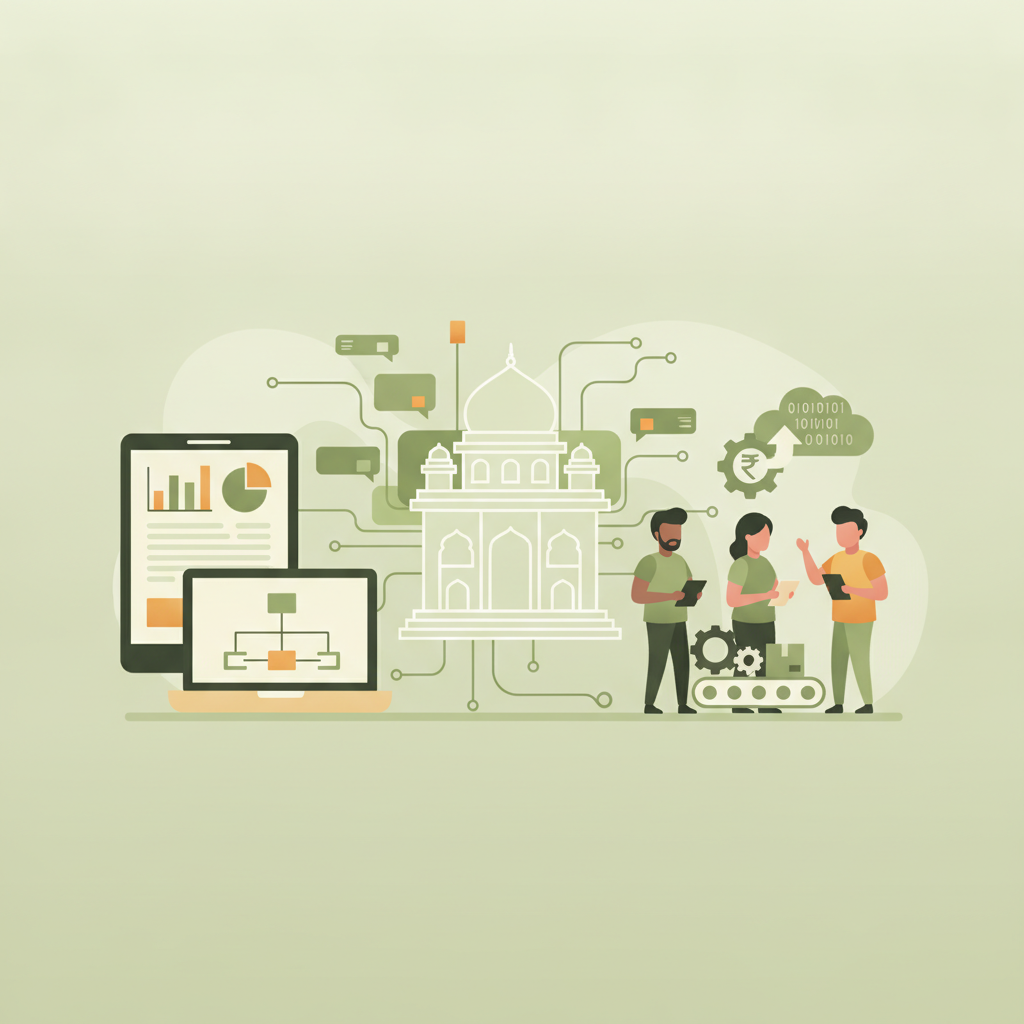
A significant trend for Indian small businesses is the evolution from simple AI assistants to more sophisticated 'AI agents' that can perform multi-step tasks and automate entire workflows. Unlike basic chatbots that merely respond to questions, AI agents can understand requests, plan actions, use various tools, execute tasks, and check results, taking the next logical step independently. These agents can integrate with existing business tools like CRMs, email systems, and payment gateways to automate processes such as booking appointments, updating customer databases, sending invoices, or managing social media posts. This shift allows small businesses to offload repetitive administrative tasks, freeing up human employees to focus on strategic initiatives and customer relationships. The adoption of such AI agents is accelerating in India, with firms increasingly leveraging them to gain a competitive edge in efficiency and scalability.
Frequently Asked Questions
How much does AI automation typically cost for a small business in India?
The cost of AI automation for small businesses in India can vary, but it has become increasingly affordable. Basic WhatsApp automation for lead response and reminders might have a one-time setup cost of ₹15,000–₹40,000. More comprehensive solutions like a full AI chatbot with CRM synchronization could range from ₹75,000–₹2,50,000 for setup. Many AI tools are also available on a subscription basis, costing around ₹2,000-₹5,000 per month or even less, making enterprise-level AI accessible. WhatsApp marketing messages, for instance, cost approximately ₹1 to ₹1.20 per message after Meta's January 2026 rate adjustments and including GST.
Which AI tools are most recommended for Indian small businesses in 2026?
For Indian small businesses in 2026, several AI tools are highly recommended based on their practical applications. For content and strategy, Large Language Models like ChatGPT and Claude are excellent for drafting marketing copy and brainstorming. For CRM intelligence, Zoho Zia and Salesforce Einstein are notable. Workflow integration can be achieved with tools like Make and Zapier. For visual design, Canva AI and Midjourney are popular choices. For customer support and WhatsApp automation specifically, India-focused providers like TARS, Verloop.io, Yellow.ai, and platforms such as Mappstore offer tailored solutions, often with multilingual support.
How can AI automation help Indian small businesses comply with the DPDP Act?
AI automation can help Indian small businesses comply with the Digital Personal Data Protection Act, 2023 (DPDP Act) by establishing clear protocols for data collection and usage. Businesses must obtain clear, specific, and informed consent before collecting or processing personal data, including through chatbots. AI systems can be configured to declare the purpose of data use on chat widgets and provide visible ways for users to withdraw consent or request data erasure. It's crucial to record when, where, and how consent was given and to avoid sending personal data to LLM providers without proper redaction or a Data Processing Agreement (DPA). Implementing AI responsibly with these considerations ensures compliance and builds customer trust.